Drag to rotate, click a piece, pick a colour
Open full screen · the page is about 9 MB because the whole garment (a 6.3 MB glTF, base64-embedded) travels inside it; nothing is fetched from a server.
The product is not the picture; it is the pattern
front panel = 460 × 550 mm   # drafted at true size
fabric      = 150 gsm knit    # simulated, not painted
mesh        = 17 named pieces # every panel addressable
colour      = a material factor, not pixels
Separate what never changes — pattern geometry, fabric physics, UV layout — from what changes per customer: colour, logo, print. Customisation stops being design labour and becomes a parameter.
What shipped
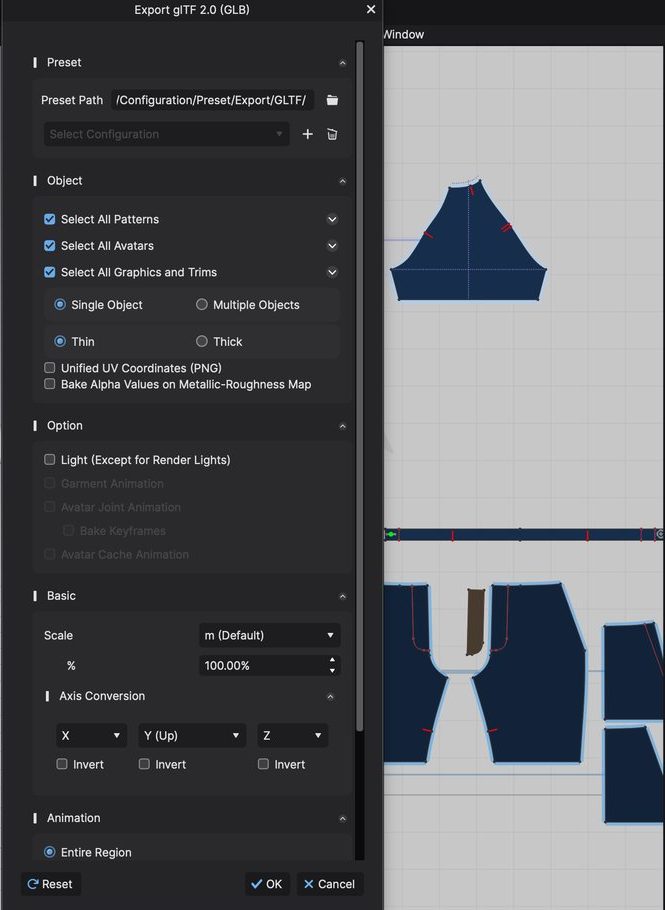
The kit was drafted from real measurements in CLO3D, draped with simulated athletic-knit physics, textured on a true-scale canvas so a chest graphic lands exactly where it would on the cut piece, and exported as a single glTF with every pattern piece as a separately named mesh. The configurator loads that file directly: click a sleeve, recolour it, and a woven-in graphic survives because colour is a material factor while the texture carries only the artwork.
What I would tell another team
Do not point generative AI at the 3D problem — the 3D problem is already solved by the pattern. The leverage is in the split: geometry and physics are deterministic and built once; the 2D design layer is where variation lives, and it is just an image at true scale. That is the layer a generative designer can be wired into: it generates a texture, not a garment, and the fixed UV frame guarantees that whatever it generates lands correctly on the cloth.
The company's own logo has been removed from the demo shown here.